
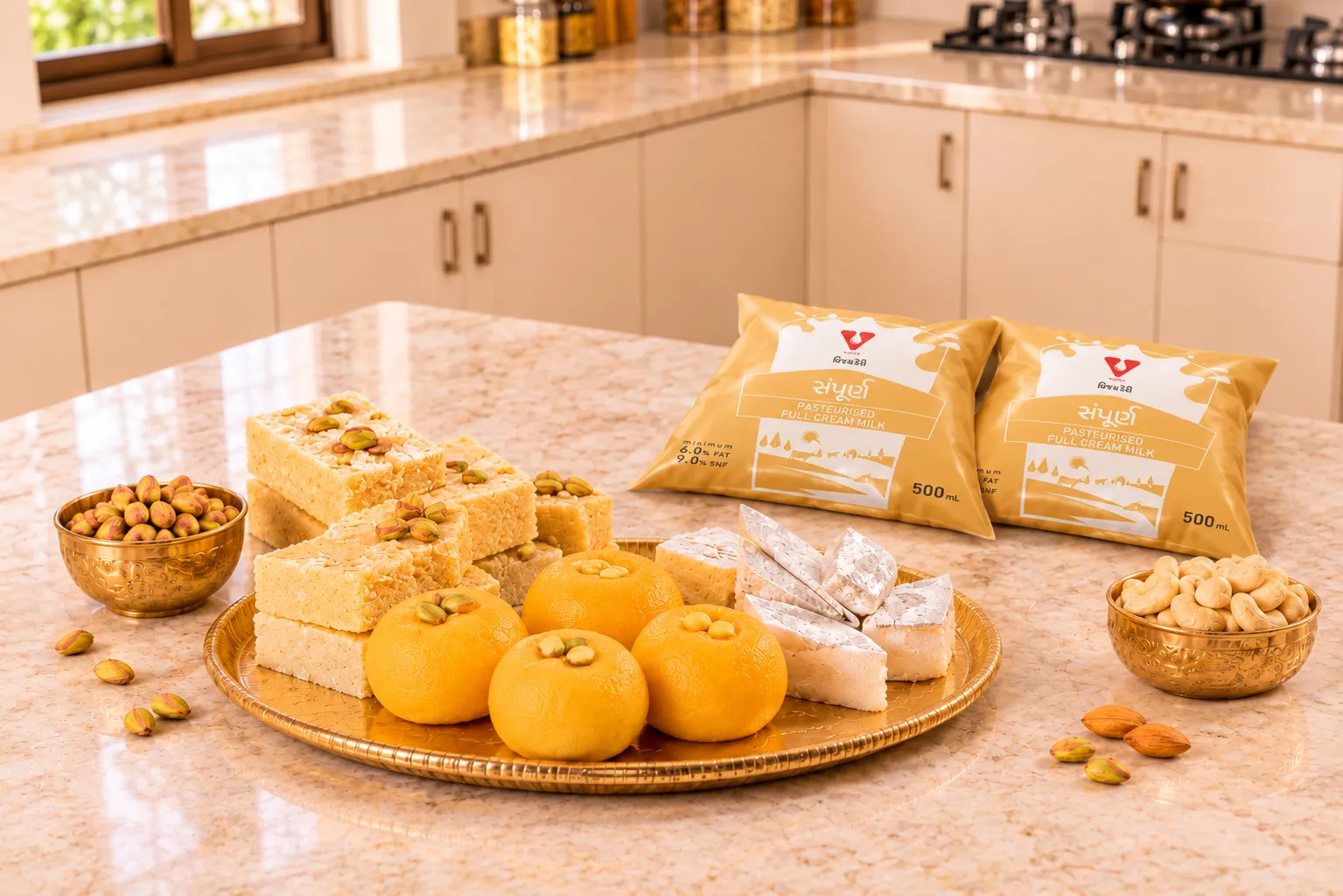
Milk is more than just an ingredient in traditional Indian sweets. It is the foundation of their richness, texture, and authentic flavor. From creamy Rabdi to soft Kesar Peda, the quality of milk influences how each sweet tastes and feels.
But what makes one mithai richer, smoother, and more flavorful than another? The answer often starts with the quality of the dairy ingredients.
Pure milk contains natural milk fat, proteins, lactose, and minerals. These components contribute to the taste, consistency, and structure of milk-based sweets. Sweet manufacturers use milk in different forms, including concentrated milk, khoya, mawa, and chhena, to prepare a variety of traditional recipes. According to the FAO’s guidance on milk quality and testing, assessing milk quality helps ensure that it is suitable for dairy processing and product preparation.
Understanding Why Pure Milk Is Essential helps consumers make informed choices and gives manufacturers a better understanding of ingredient quality. Here are seven important reasons why pure milk plays such an important role in making rich and flavorful mithai.
1. Pure Milk Creates a Rich and Creamy Texture
The texture of mithai determines much of the eating experience. A good milk-based sweet should have the right balance of softness, density, and creaminess.
Pure milk provides natural fat and milk solids that contribute to this texture. When manufacturers heat and concentrate milk under controlled conditions, its moisture content decreases while its milk solids become more concentrated.
This process forms the foundation of several popular sweets.
- Rabdi develops its creamy consistency through slow milk reduction.
- Milk Barfi gets its dense yet soft structure from concentrated milk solids.
- Kesar Peda uses milk-based ingredients to achieve its characteristic smooth texture.
The quality of milk and the preparation process work together to create the desired consistency. This makes pure milk for sweets an important consideration for traditional sweet manufacturing.
2. It Enhances the Natural Flavor of Traditional Mithai
Authentic mithai has a recognizable flavor that comes from the natural taste of its ingredients. Pure milk provides a rich dairy base that complements traditional ingredients such as saffron, cardamom, almonds, pistachios, and sugar.
For example, Kesar Peda combines concentrated milk solids with saffron to create its distinctive aroma and taste. Rabdi develops a deeper dairy flavor as manufacturers reduce the milk. Similarly, Mawa Gujiya uses a milk-based filling to create a rich center.
Good-quality dairy ingredients allow these flavors to blend naturally. They also help preserve the traditional taste of regional Indian sweets.
This is another important reason why pure milk is essential for preparing mithai that delivers a balanced and authentic flavor.
3. Pure Milk Helps Produce Quality Khoya and Mawa
Khoya, also known as mawa, is one of the most important ingredients in traditional Indian sweet manufacturing. Manufacturers prepare it by heating milk and reducing its moisture content until it reaches a thick, concentrated consistency.
The quality of the milk influences the final characteristics of khoya. Its fat and solid content contribute to the richness, consistency, and flavor of the finished ingredient.
Khoya supports the preparation of several popular sweets.
- Ghari uses a rich traditional filling that includes mawa.
- Gulab Jamun uses khoya-based dough to develop its soft interior.
- Mawa Gujiya features a creamy milk-based filling.
- Kesar Peda uses concentrated milk solids for its dense texture.
For dairy product manufacturers, selecting suitable milk and maintaining controlled heating conditions are essential steps. These practices help achieve consistent khoya quality and support better results in the final mithai.
4. It Helps Maintain the Ideal Consistency of Milk-Based Sweets
Different mithai varieties require different textures. Peda needs a soft and slightly dense consistency. Rabdi requires a creamy body. Milk Barfi needs enough structure to hold its shape while remaining pleasant to bite.
Milk proteins contribute to the structure of dairy preparations, while milk fat influences richness and mouthfeel. Moisture reduction, heating temperature, mixing, and cooling also affect the final consistency.
For instance, excessive moisture can make some milk-based sweets too soft. Overheating can make them excessively firm or affect their flavor.
Manufacturers must therefore control the preparation process according to the recipe.
Understanding Why Pure Milk Is Essential also means recognizing how milk composition and processing conditions influence the final quality of mithai.
5. Pure Milk Provides Important Dairy Nutrients
Traditional milk-based sweets contain nutrients naturally present in dairy ingredients. Milk provides protein, calcium, phosphorus, and other essential nutrients.
These components remain part of preparations that use concentrated milk solids, although their quantities vary according to the recipe and processing method.
Consider a few popular examples:
- Milk Peda contains dairy-based ingredients that contribute protein and calcium.
- Rabdi uses concentrated milk, which retains several milk nutrients.
- Milk Barfi contains milk solids that contribute to its nutritional composition.
However, the nutritional value of mithai also depends on added sugar, fat, portion size, and other ingredients. Therefore, milk-based sweets are best enjoyed in moderation.
Using quality milk gives manufacturers a suitable dairy foundation for preparing traditional sweets with recognizable ingredients.
6. It Preserves the Authenticity of Traditional Indian Recipes
Every region of India has its own mithai traditions. Many of these recipes depend on milk and milk-based ingredients to achieve their characteristic taste and texture.
Surti Ghari, for example, it is known for its rich filling and traditional preparation. Kesar Peda combines concentrated milk solids with aromatic saffron. Rabdi showcases the creamy layers that develop during milk reduction.
These sweets require more than a list of ingredients. Their traditional identity also depends on preparation techniques and the quality of the dairy components.
Pure milk helps manufacturers work with the natural characteristics of dairy ingredients. It supports traditional preparation methods and helps preserve the familiar qualities of regional sweets.
This is why Pure Milk Is Essential goes beyond taste. It also connects ingredient quality with the authenticity of Indian mithai.
7. Pure Milk Supports Consistent Quality in Dairy Manufacturing
Commercial mithai production requires careful control at every stage. Dairy product manufacturers must maintain suitable ingredient standards, hygienic processing conditions, and consistent recipes.
Pure milk provides an important starting point for milk-based sweet production. However, manufacturers must also follow appropriate quality and food safety practices.
Some important manufacturing considerations include:
Milk quality testing
Manufacturers assess parameters such as milk fat, SNF (Solids-Not-Fat), and other quality indicators to understand milk composition.
Pasteurization and hygienic handling
Appropriate heat treatment and hygienic handling help control harmful microorganisms and support milk safety.
Controlled milk concentration
Manufacturers manage heating and moisture reduction to achieve the required consistency for khoya, mawa, and other milk-based ingredients.
Standardized production
Consistent recipes and controlled processing conditions help maintain similar taste, texture, and quality across batches.
Proper storage
Suitable storage temperatures and hygienic packaging help maintain product quality and freshness.
These practices work together to support reliable commercial sweet manufacturing. They also explain Why Pure Milk Is Essential for manufacturers who focus on consistent product quality.
How to Identify Quality Milk-Based Mithai
Consumers can also pay attention to a few characteristics when selecting traditional sweets.
- Texture: Milk-based sweets should have a consistency appropriate to their variety.
- Flavor: They should offer a balanced dairy flavor without unusual or unpleasant notes.
- Appearance: The color should look natural and suitable for the particular sweet.
- Freshness: Check the manufacturing date, storage instructions, and best-before information.
- Ingredient information: Choose products from manufacturers that provide clear ingredient and food safety information.
These observations help consumers make more informed purchasing decisions.
Choose Quality Dairy Ingredients for Rich and Flavorful Mithai
The quality of milk influences several important aspects of traditional mithai. It contributes to creamy textures, rich flavors, concentrated milk solids, and the familiar characteristics of regional sweets.
From preparing khoya and mawa to producing Rabdi, Peda, and Milk Barfi, pure milk remains an important ingredient in traditional sweet manufacturing. However, quality also depends on hygienic processing, suitable storage, and consistent production practices.
With more than 50 years of experience in the dairy and sweets industry, Vijay Dairy brings traditional expertise and a commitment to quality to its range of dairy products and Indian sweets.
Looking for authentic Indian mithai for everyday enjoyment or special celebrations? Explore the collection of traditional sweets at Vijay Dairy. Discover favorites such as Kesar Peda, Milk Barfi, Rabdi, and Mawa Gujiya. Order Indian sweets online and bring traditional flavors to your celebrations.
Frequently Asked Questions
1. Why is pure milk important in making Indian sweets?
Pure milk provides natural milk fat, proteins, and solids. These components contribute to the flavor, texture, and consistency of traditional milk-based sweets.
2. Which Indian sweets use milk as a primary ingredient?
Rabdi, Milk Barfi, Kesar Peda, Peda, and several varieties of khoya-based sweets use milk or concentrated milk solids as important ingredients.
3. How does milk quality affect khoya preparation?
Milk composition influences the richness, yield, and consistency of khoya. Suitable milk quality and controlled heating help produce concentrated milk solids with the desired characteristics.
4. What is the difference between khoya and mawa?
Khoya and mawa are two names for essentially the same concentrated milk product. Manufacturers prepare them by heating milk and reducing its moisture content.
5. Why do sweet manufacturers focus on milk quality?
Milk quality influences the taste, texture, consistency, and production characteristics of milk-based sweets. Manufacturers also monitor hygiene, processing, and storage to maintain product quality and safety.